
Turn Inherited Jewellery Into Financial Freedom - Without the Guilt or Guesswork
You've inherited your parents' or grandparents' jewellery collection, but you're not sure what to do with it. Miller Hirsch helps Australians transform inherited heirlooms into practical funds through transparent valuations and fair market offers - honouring your loved one's legacy while supporting your financial future.
Experience matters
Miller Hirsch is led by second-generation diamond experts with over 60 years' combined experience, providing independent valuations and fair purchase offers for inherited collections - from single rings to entire estates. Based in Rose Bay, serving families across Sydney and Australia.
When the Jewellery Box Feels Like an Overwhelming Responsibility
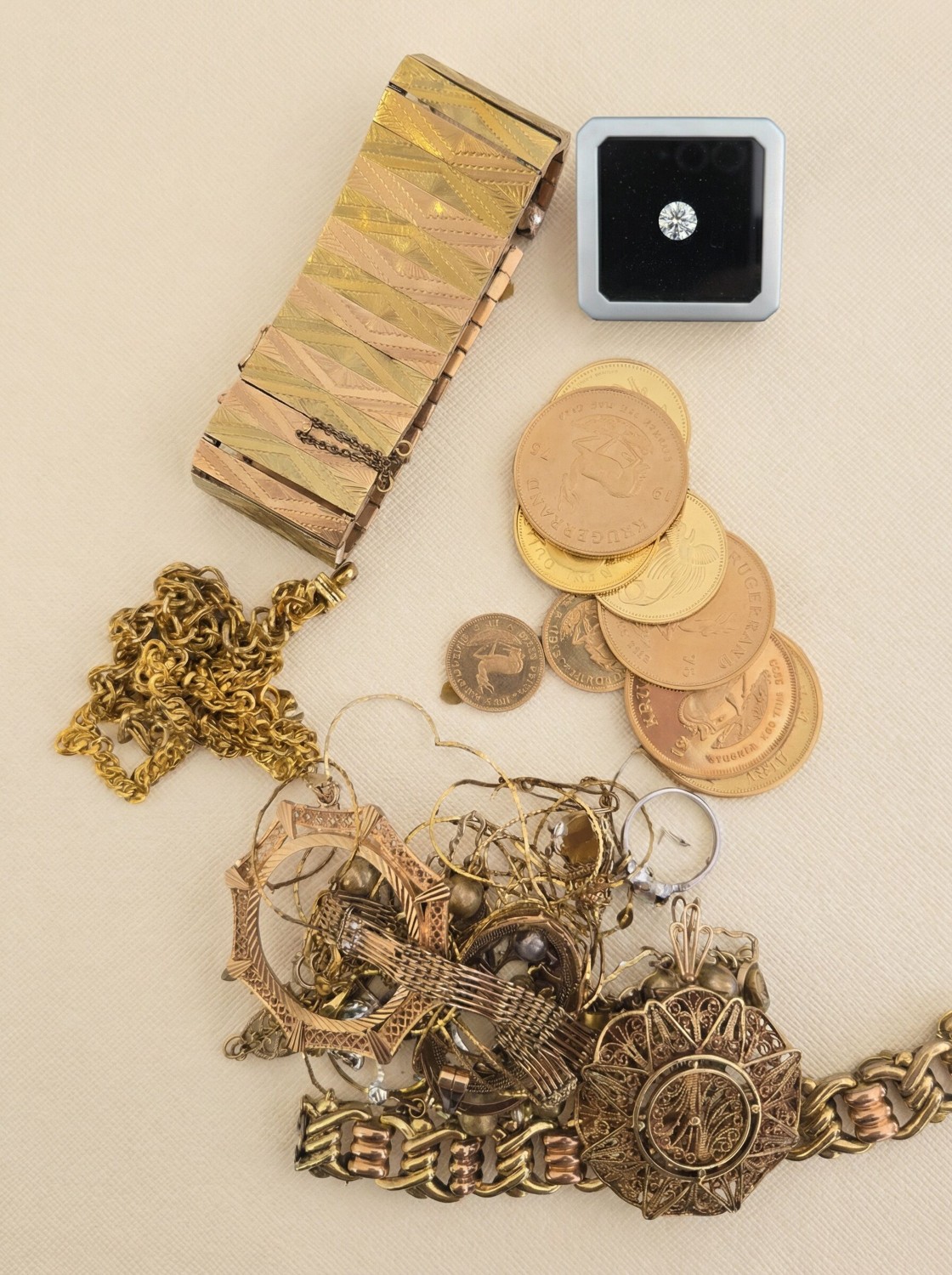
You've inherited your mother's engagement ring, your grandmother's brooch collection, or perhaps an entire jewellery box filled with decades of accumulated pieces. Some look valuable, others might be costume jewellery, and you honestly have no idea where to start. The insurance valuation from 20 years ago says $15,000, but a gold buyer offered you $2,500 - are you being ripped off, or is that realistic?
Beyond the confusion about value, there's the emotional weight. You feel guilty even considering selling items that meant so much to your loved one. Will your family judge you? Are you dishonouring their memory by converting these heirlooms to cash? Yet you need the funds for your mortgage, your children's education, or simply to distribute the estate fairly among siblings.
You're probably thinking ...
"Is it wrong to sell family heirlooms? Will I regret converting my parents' jewellery to cash?"
"Why is the offer so much lower than the insurance valuation - am I being scammed?"
"How do I know if I have valuable antiques or just costume jewellery? What if I accidentally sell a treasure for scrap gold prices?"
"If multiple siblings inherited the collection, how do we distribute or sell items fairly without causing family conflict?"
Don't worry, we can help!
Our solution
A Respectful, Transparent Process That Honors Legacy While Providing Fair Value
Miller Hirsch specializes in helping Australian families navigate the emotional and financial journey of selling inherited jewellery. Unlike pawnshops that only see scrap value, or retail jewellers who quote unrealistic insurance replacement figures, we provide honest education about what your items are genuinely worth in today's market - separating antique treasures from costume pieces, identifying designer signatures that command premiums, and explaining why resale values differ from original purchase prices. Our goal is to help you make informed, guilt-free decisions that honor your loved one's legacy.
Initial Triage & Education
Bring your entire inherited collection to our Rose Bay office - no need to sort or clean anything. We perform an initial triage, separating fine jewellery (gold, silver, platinum with natural gemstones) from costume pieces, and identifying high-value items like signed designer pieces (Cartier, Tiffany), antiques (Victorian, Art Deco), or investment-grade diamonds that deserve special attention beyond scrap value.
Transparent Material Assessment
We test and evaluate each piece in front of you using professional equipment - checking hallmarks (9ct, 18ct, platinum stamps), weighing items on precision scales, assessing diamond quality using the 4 Cs, and identifying era and craftsmanship indicators. You see exactly what we're testing and why, removing the mystery from the valuation process.
Clear Value Explanation: Insurance vs. Market Reality
We explain the critical difference between insurance replacement value (what it costs to buy new in a retail store), probate value (conservative court estimate), and fair market value (what second-hand buyers actually pay). This education ensures you understand why an item insured for $10,000 might realistically sell for $3,000 - not because you're being cheated, but because retail markups, manufacturing costs, and GST don't transfer to the secondary market.
Fair Offers & Family-Friendly Options
You receive itemized, written offers for each piece or the entire collection - with clear breakdowns showing gold weight value, gemstone value, and any design or brand premiums. We respect family dynamics: if multiple siblings are involved, we can provide neutral valuations to facilitate fair distribution, or purchase the entire collection so proceeds can be split equally.
Key Benefits
Guilt-free clarity: Professional guidance that reframes selling heirlooms as honoring legacy - transforming static objects into resources that fund education, homes, or new family memories.
Protection from scams: We identify valuable antiques, designer signatures, and period pieces (Art Deco, Victorian) that gold buyers would melt for scrap, ensuring you never leave money on the table.
Family conflict resolution: Neutral third-party valuations that provide documented fair market prices, removing emotion from sibling disputes about "who gets what" or buy-out scenarios.
Complete transparency: See the testing, understand the math, receive written documentation - no pressure tactics, no "offer only good for one hour" urgency traps.
WHy choose Miller Hirsch
Professional Expertise That Respects Both Value and Sentiment
Second-generation diamond professionals with over 60 years' combined expertise across diamond cutting, wholesale operations, retail, and professional estate buying - including work with De Beers Sightholder operations and global diamond markets.
Industry leadership: Craig Miller serves as President of the Diamond Dealers Club of Australia, demonstrating recognized standing within Australia's jewellery trade.
Specialist knowledge in estate and antique jewellery: Qualified gemmologists who can identify period pieces (Art Deco, Victorian, Edwardian), old-cut diamonds (Old Miners, European cuts), signed designer items (Cartier, Tiffany, Van Cleef & Arpels), and distinguish genuine antiques from reproductions - critical for accurate probate valuations.
Probate valuation expertise: We understand the critical difference between insurance replacement value and fair market value for estate administration, providing documentation that withstands legal scrutiny.
60+ Years of Experience
We have the expertise and equipment to assess your jewellery on the spot - giving you peace of mind and full transparency.
Trusted Company
Fully licensed and insured - we have a reputation built on integrity, experience, and a history of successful outcomes.
Same Day Payment
If you choose to sell to us we can arrange to have payment made into your nominated bank account on the same day.
Your Questions Answered
Is it wrong to sell inherited jewellery? Will I dishonor my loved one's memory?
No, and here's why: jewellery sitting unworn in a drawer or safety deposit box honors no one. Your parents or grandparents likely wanted their assets to benefit you - whether that means paying off a mortgage, funding your children's education, creating new family memories through travel, or simply relieving financial stress. Selling inherited items doesn't erase memories; those live in your heart and your history, not in physical objects. Many of our clients find the process cathartic - they transform "dead capital" (valuable items generating no joy or utility) into resources that actively improve their lives today. If the style doesn't suit you, if it requires expensive insurance and storage, or if keeping it creates family conflict over "who gets what," selling is often the healthiest, most practical choice. You're not being mercenary; you're being wise.
Why is the offer so much lower than the insurance valuation? Am I being ripped off?
Almost certainly not - this is the most common source of confusion and disappointment when selling inherited jewellery. Insurance valuations document "retail replacement value" - what it would cost to walk into a high-end jewellery store today and buy a brand-new equivalent, including manufacturing, retail markup (often 200-300%), GST, marketing, rent, and staff wages. When you sell on the secondary market, you're selling to wholesalers or dealers who pay for the intrinsic value (gold weight, diamond quality) plus any extrinsic value (brand premium like Cartier, era premium like Art Deco, collectability). They don't pay for the original retail experience. A ring insured for $10,000 might have only $2,000 worth of gold and diamonds in raw materials, with perhaps $3,500-$4,000 fair market value if it's a desirable design. Our role is to explain this gap before you receive offers, so realistic expectations are set. We also ensure you never accept scrap gold prices for antique or designer pieces that deserve higher collectible premiums.
How do I know if I have valuable antiques or just costume jewellery?
This is exactly why professional assessment matters. Costume jewellery (fashion items made from base metals and simulated stones) looks deceptively similar to fine jewellery at first glance. Key indicators: check for hallmarks (stamps like 375, 750, 925, or PLAT inside rings or on clasps); assess weight (real gold and platinum are dense and heavy); examine stone settings (fine jewellery uses prongs or bezels, costume pieces often glue stones in); and test temperature (real gemstones feel cold initially, glass/plastic warms quickly). However, even experienced eyes can be fooled - unmarked handmade pieces, old-cut diamonds, or high-quality vintage costume jewellery by designers like Chanel can all surprise you. We provide free initial verbal assessments where we sort your collection into three piles: costume (minimal value), fine jewellery (gold/silver/gemstones), and high-value investment pieces (signed designers, antiques, large diamonds). This triage ensures nothing gets accidentally sold for scrap when it deserves a premium.
If multiple siblings inherited the collection, how do we sell or distribute items fairly?
Family conflict over inherited jewellery is incredibly common, which is why neutral third-party intervention is so valuable. We recommend two approaches: Total liquidation (cleanest method) - sell the entire collection to us or via auction, pool the cash proceeds, and divide according to will percentages. No arguments about who got the "better" piece. Valuation-based distribution - we provide written fair market valuations for each item; beneficiaries then use a round-robin selection process (taking turns choosing pieces), with the total value of each person's selections tracked. If one sibling chooses $5,000 worth of jewellery and another chooses $2,000 worth, the $3,000 difference is offset against their cash inheritance from the rest of the estate. The key is using realistic market values (what the estate would actually receive if sold to a dealer), not inflated insurance values. We also handle buy-out scenarios: if one sibling wants to keep a specific ring, they pay the estate the fair market value we've documented, protecting both the keeper and the other beneficiaries.
What if I'm not sure whether I should sell or keep certain pieces?
You don't have to decide everything at once. We encourage a phased approach: first, get the collection professionally assessed so you understand what you actually have and what it's genuinely worth. This removes the paralysis of uncertainty. Second, offer specific items to family members - children, nieces, nephews - to see if anyone wants to keep them for sentimental reasons. Give them first right of refusal. Third, separate pieces into "definite sell" (broken chains, styles you'll never wear, items requiring expensive insurance) and "maybe keep" (pieces with strong emotional attachment or unique beauty). You can sell the definite pile immediately to generate funds, then take your time deciding about the rest. We'll hold our valuation figures for a reasonable period, so you're not pressured to rush. Many clients find that once they sell a few pieces and see fair, transparent pricing in action, their guilt diminishes and decision-making becomes easier.
What about tax implications - do I have to pay tax on the money I receive from selling inherited jewellery?
Australia has no inheritance tax or death duty, but capital gains tax (CGT) may apply under specific circumstances. Generally, jewellery is classified as a "personal use asset" - if the deceased originally acquired the item for personal wear (not investment), and it was valued at less than $10,000 at the time they bought it, CGT typically doesn't apply when you sell it. There's also a $500 exemption threshold: if the item's value at the date of death (your acquisition cost base) was $500 or less, gains are generally disregarded. Where CGT can apply: if the deceased held jewellery purely as investment (e.g., loose diamonds never worn, kept in a vault), or if high-value items (over $10,000) were acquired for investment purposes. In these cases, you're taxed on the profit between the probate value at date of death and your sale price. If you held the item for more than 12 months after inheriting, you may qualify for the 50% CGT discount. This is complex territory - always consult a qualified tax accountant for your specific situation. Our valuations provide the documentation you need to establish the cost base for ATO purposes.
Ready to Discover What You've Actually Inherited?
Book a confidential, no-obligation appointment at our Rose Bay office. Bring your entire inherited collection - rings, brooches, chains, whatever you've received - and we'll provide honest, transparent assessments that separate valuable antiques from costume pieces, explain realistic market values, and give you the information you need to make guilt-free, informed decisions.
Our mission is to provide a superb, respectful, and transparent experience that delivers relief, satisfaction, consonance, and happiness to every client
Navigation
ABN 44 691 903 616
Second Hand Dealers Licence No: 2PS30288
Address
1/795 New South Head Road
Rose Bay NSW 2029
Phone: (02) 9053 6755
Email: [email protected]


© 2026 Miller Hirsch - All Rights Reserved.
Contact
FAQ
Privacy Policy